The House of Palms by Tarek Eltayeb: Storytelling as a Refuge from Exile
The novel The House of Palms (Shtëpia e palmave) by Tarek Eltayeb intertwines the pain of exile with the warmth of memory, love, and storytelling. At its centre stands Hamza Yusuf, a man who carries within him the traces of lost places and people. His journey from Sudan, through Egypt, to Vienna becomes a continuous search for belonging and human connection. Through his unsettled life, the novel portrays not only the fate of an individual but also the wounds of societies fractured by war, poverty, and displacement.
Hamza's past is marked by unanswered absences. His first love, Leila, disappears from his life, leaving him unaware of her whereabouts; his father vanishes, leaving behind the uncertainty of abandonment; and his village, Wad Nar, is devastated by drought until it seems as though no one had ever lived there. All that remains of his former world are painful memories, three gravestones belonging to loved ones, and his cat Hakima, whose wandering and disappearance mirror the protagonist's own condition. Exile thus begins long before the physical departure from one's homeland, at the moment when the relationships that once gave life meaning begin to disappear.
The novel's geography unfolds through contrasts. Sudan is portrayed through war, displacement, and oppressive figures, but also through human kindness, Sufi spirituality, and solidarity. Egypt carries its own tensions alongside the warmth of everyday relationships. Vienna, meanwhile, is experienced through cold, darkness, loneliness, and encounters with racism, yet it also offers the possibility of companionship and love. Each place acquires meaning through the people Hamza encounters and the impressions they leave upon him.
Within this world, storytelling becomes a means of confronting loss. By recounting his childhood, first love, and journeys, Hamza attempts to reconnect the scattered fragments of his life. Memory wounds him, yet simultaneously protects him from emptiness. This dimension is reinforced by dreams, which intertwine with recollection and everyday experience, creating a space in which desire and absence take narrative form.
Sandra occupies a central place in this search for warmth. She listens to Hamza, embraces his world, and develops an appreciation for the food, music, and stories he carries from his homeland. Through her presence, the burden of being a stranger becomes less oppressive. A critical reading of the novel also allows for a symbolic interpretation of Sandra's almost perfect responsiveness to his needs: she may be understood as an embodiment of the intimacy Hamza longs for. This remains an interpretive possibility, suggested by the role of dreams and the protagonist's profound loneliness. Her illness and death bring loss once again to the centre of his life.
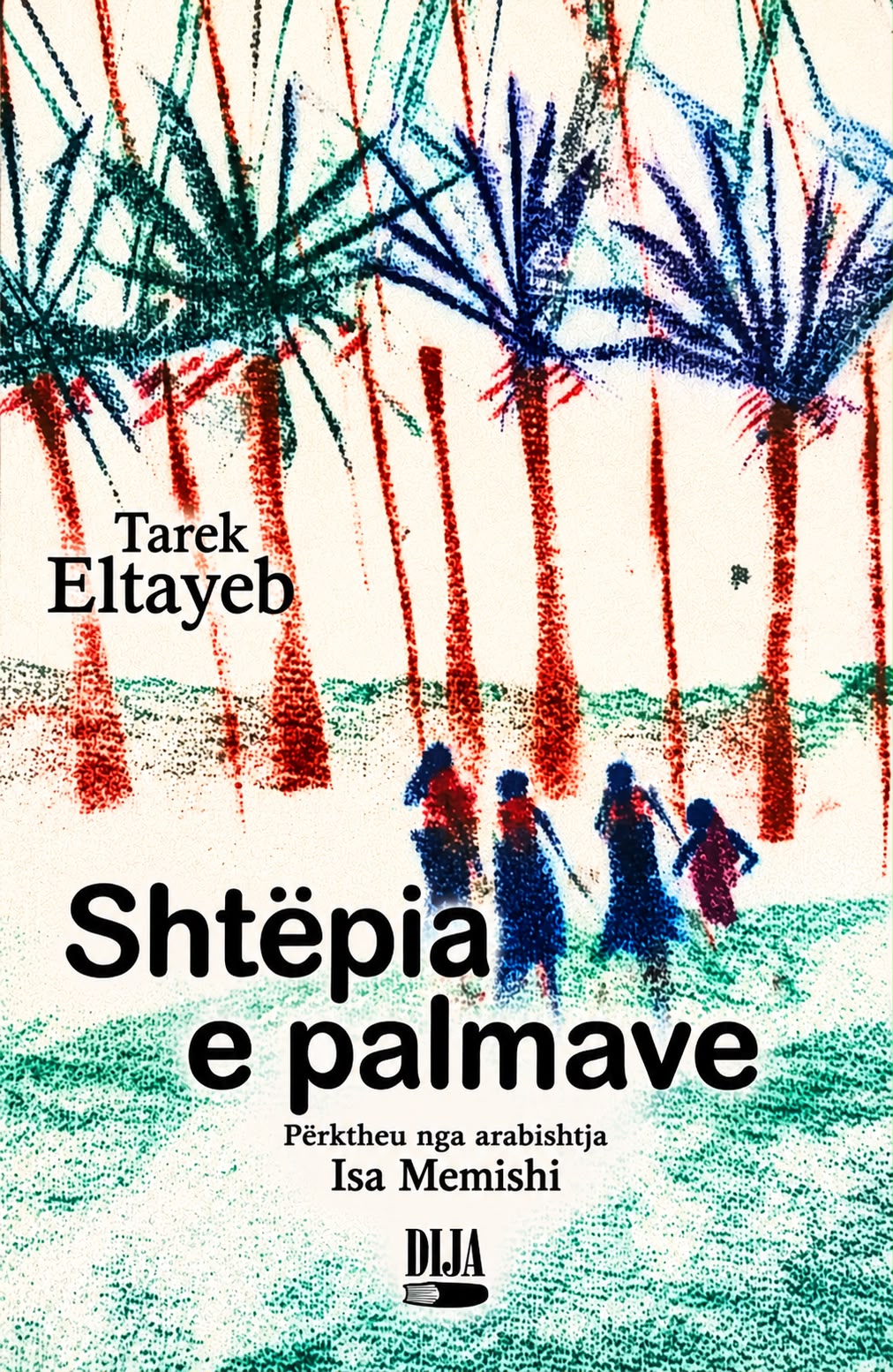
The significance of the title lies in the attempt to create a refuge within an unfamiliar and cold environment. Hamza covers the walls of his home with wallpaper decorated with palm trees, symbolically bringing the landscape of his homeland closer to him. Just as the palms lend the room an imagined warmth, storytelling and love offer his life a renewed possibility of belonging. The House of Palms brings readers close to a profoundly human need: to find someone willing to listen and, through that act of listening, to transform one's memories into a shared home.